
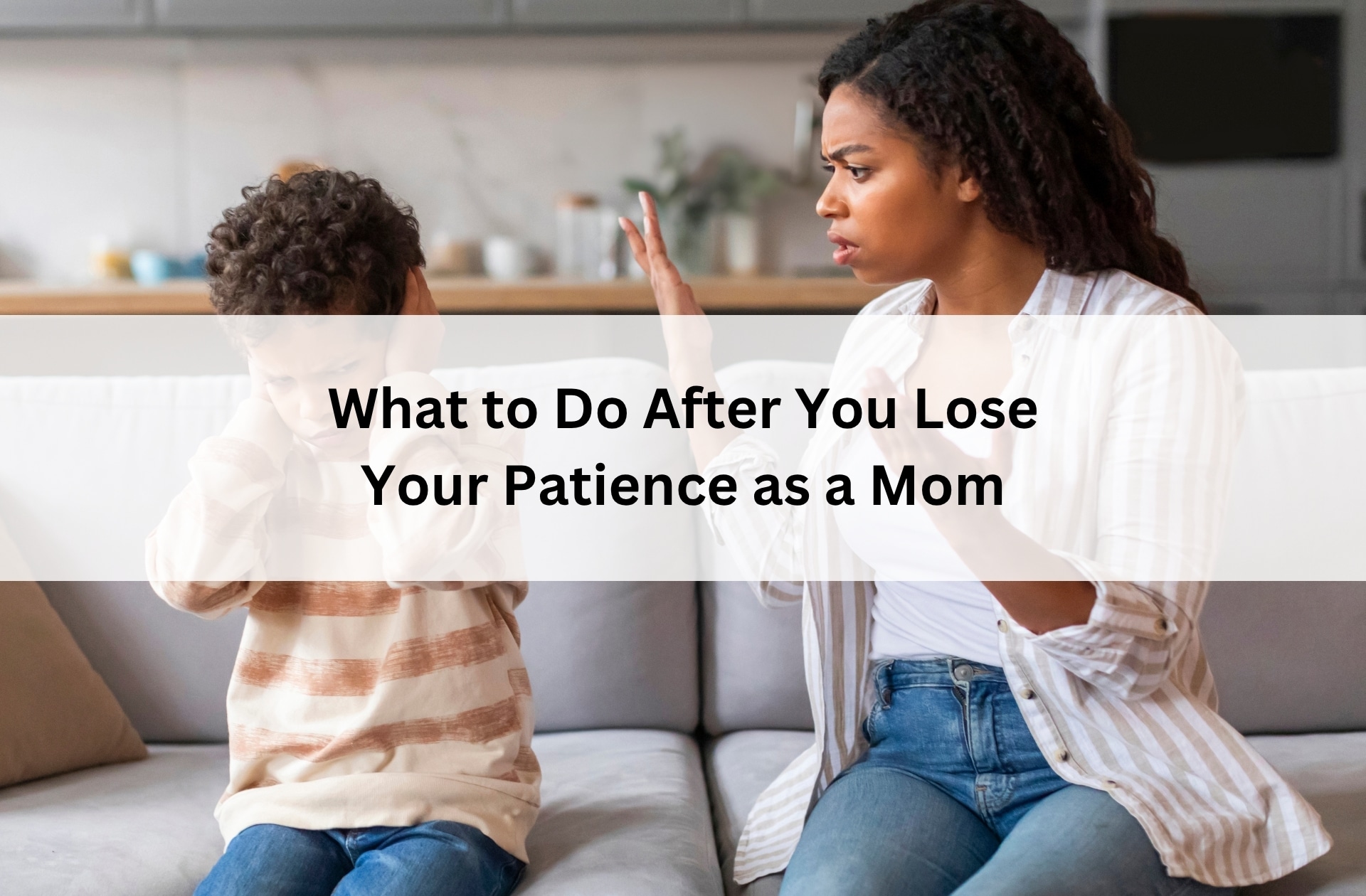
What to Do After You Lose Your Patience as a Mom

Introduction: Finding Your Way Forward After Losing Patience
If you’re wondering what to do after you lose your patience as a mom, you may be replaying a moment everyone else seems to have moved past. Your child is playing again, dinner still needs to happen, and you keep thinking about your words. Maybe you yelled. Maybe it was a sharp tone or an impatient answer you wish you could take back.
After losing patience with your child, pause until you can speak calmly, acknowledge what happened, and apologize without blaming your child for your response. Give them room to share their feelings and reconnect without expecting immediate forgiveness. You can also ask God for help as you consider what needs to change before the next difficult moment.
In real life, that can feel harder than it sounds. You might want to make everything better immediately, or feel uncomfortable bringing it up again. Mom guilt after losing patience can leave you questioning yourself long after the moment has passed.
As a Christian mom, you may also feel disappointed that your response did not reflect the patience you want to practice. You can acknowledge that disappointment while remembering that God’s grace is available as you take responsibility and learn.
These hard moments deserve attention, but they do not tell the whole story of your motherhood. Let’s walk through how to respond to your child, address the mom guilt you may be carrying, and prepare for next time—starting with what you can do today, rather than everything you wish you had done differently.
What Does This Mean for Christian Moms?
Losing patience as a Christian mom can feel especially discouraging when you want your home to reflect the love you believe in. You love God, you love your children, and you still have moments when your words come out sharper than you intended. That gap between your intentions and your response deserves attention, but it does not erase your love or your willingness to grow.
There is a meaningful difference between saying, “I responded in a hurtful way,” and deciding, “I am a bad mother.” The first names a behavior you can take responsibility for. The second turns a difficult moment into a judgment about your whole identity. Christian mom guilt can pull you toward that judgment, making it harder to focus on what your child needs from you now.
God’s Word gives us room to acknowledge wrongdoing and receive grace. You do not have to minimize hurtful words to accept God’s forgiveness, and you do not have to keep insulting yourself to prove that you regret them. Losing your temper as a mom calls for accountability, including a willingness to learn better ways of responding when pressure builds.
Apologizing to your child can be part of living out your faith at home. It shows that adults also need to admit mistakes, listen, and change their behavior. You can uphold a necessary boundary while acknowledging that the way you expressed it was hurtful.
The most important thing in returning to that moment is being willing to hear your child’s experience and take responsibility for your part. The Holy Spirit can help you practice patience and self-control as you do the hard things that growth requires. You can begin with humility, trusting that you are loved by God while you learn to respond with greater care.
Why This Feels So Heavy
You Keep Replaying What Happened
Mom guilt after yelling can follow you into the rest of your day. You might remember the look on your child’s face, the volume of your voice, or a sentence you wish you could take back. Even while you’re folding laundry or answering a message, your thoughts return to that moment.
Feeling guilty after yelling at your child can begin with regret about your response and turn into repeated criticism of yourself. You may find yourself collecting other parenting mistakes as evidence that you should be doing better. If you’re having a hard time moving forward, it may be because this relationship matters deeply to you.
You can care about what happened without replaying it endlessly. Bring your attention back to what you can take responsibility for now: your words, your willingness to listen, and how you respond when you return to your child.
Your Capacity May Already Be Stretched
An overwhelmed mom losing patience may be carrying much more than the frustration happening in front of her. Interrupted sleep, caregiving, work deadlines, repeated requests, and limited support can all add pressure. Something that feels manageable one morning may feel much harder after several exhausting days.
Different seasons of motherhood bring different demands. In some hard seasons, your home life may involve caring for a parent while raising children, managing your own health needs, or handling responsibilities with little backup. When those demands show up on a daily basis, it helps to notice how much room you have for rest and support.
Understanding your stress levels gives you information you can use. You might recognize a need for fewer commitments, a less rushed transition, or practical help. Those pressures do not excuse hurtful words, and your child is not responsible for managing them. They can, however, help you see where change is needed before frustration builds again.
You Expected Yourself to Handle Everything Better
You may have imagined that a patient mother stays composed through repeated questions, sibling arguments, and plans that fall apart. Add the desire to reflect Jesus to your children, and one impatient response can feel like you have fallen short in several ways at once.
Unrealistic expectations leave little room for being tired, needing help, or learning a skill you have not mastered. You can value patience while recognizing that practicing it takes more than telling yourself to try harder. Growth may involve asking for support, changing part of your routine, and noticing when you need to pause.
Your faith gives you somewhere to bring these struggles as you work through them. Instead of asking why you cannot handle everything, consider a question that offers a place to begin: What was happening before I reached my limit?
What God’s Word Says About This
God Calls Us to Listen and Address Our Anger
Bible verses about patience for moms can help you see what faith looks like after a difficult parenting moment. God’s Word calls us to be “swift to hear, slow to speak, and slow to anger” (James 1:19, WEB). The next verse reminds us that human anger does not produce God’s righteousness.
In everyday parenting, this gives you a reason to pause before explaining yourself. Your child may remember the conversation differently than you do. Listening allows you to understand what they experienced without immediately correcting their feelings or defending your intentions.
This passage does not promise that you will never feel frustrated. It gives you direction for how to respond when frustration rises and how to return after you have spoken too quickly. You can begin by making room for your child’s words, even when hearing them feels uncomfortable.
Our Words and Our Repair Both Matter
Among the Bible verses about anger and self-control, Ephesians offers a clear reminder: “Be angry, and don’t sin” (Ephesians 4:26, WEB). Feeling angry does not give us permission to speak in ways that hurt someone else.
The passage also directs us toward words that build others up and says, “And be kind to one another” (Ephesians 4:32, WEB). That kindness belongs in our conversations with our children, including the ones where we need to correct behavior or hold a boundary.
After losing patience, applying these verses means acknowledging how you spoke and considering what needs to change. An apology matters, and the effort that follows helps make those words meaningful. You might practice pausing earlier or asking for help before frustration builds.
The good things you want to nurture at home—respect, kindness, and trust—need attention in your responses as well as your expectations for your child.
Confession and Growth Give You a Way Forward
Biblical encouragement for overwhelmed moms includes the invitation to bring wrongdoing to God. “If we confess our sins, he is faithful and righteous to forgive us the sins” (1 John 1:9, WEB). You can name what happened without hiding it or making excuses.
Galatians describes “the fruit of the Spirit” and includes patience and self-control (Galatians 5:22–23, WEB). As you depend on the Holy Spirit, you can practice those qualities through everyday choices: listening longer, changing your tone, and seeking support when a pattern feels difficult to change.
Trusting God’s timing as you grow does not mean delaying an apology. You can take responsibility today while recognizing that learning new responses takes practice. God’s forgiveness gives you a reason to move forward with humility and hope as you do that work.
Practical Steps to Take This Week
Knowing what to do after yelling at your child can help you move from regret toward action. Start with the conversation in front of you, then consider what could help next time.
1. Pause Before You Try to Fix the Conversation
If your voice is still rising or you feel ready to argue, pause the exchange before trying to explain yourself. Make sure your child is safe and appropriately supervised if you need to step away briefly. With a younger child, you may need to stay nearby while you settle.
You might say, “I need a moment to calm down so I can speak respectfully.” Then take a few slow breaths, drink some water, or turn down background noise.
Simple stress relief tips can give you something manageable to do in that moment. You do not need to feel completely relaxed before returning, but you do need enough composure to listen and speak without continuing the hurtful exchange.
2. Name What You Did Without Blaming Your Child
Be specific about the response you need to address. Perhaps you yelled across the room, snapped at a question, or used words that were unnecessarily harsh. Naming your behavior keeps the conversation focused on something you can take responsibility for.
Our kids’ behaviors sometimes need correction, but they do not make them responsible for the words we choose. Avoid adding “because you would not listen” to your acknowledgment. That shifts responsibility back onto your child.
You can still maintain an appropriate limit. If your child was throwing toys, the rule about throwing toys remains. Apologizing for yelling does not require removing that boundary. It shows your child that respectful communication matters for everyone, including the parent who sets the rules.
3. Offer a Clear, Age-Appropriate Apology
When thinking about how to apologize to your child, keep your words simple enough for them to understand. Name what you did, take responsibility, and say you are sorry.
For example: “I yelled at you, and that was hurtful. I’m sorry. I’m responsible for how I speak, even when I’m frustrated.”
A younger child may need only those few sentences. An older child may have questions or want to discuss what happened. Let their needs guide how much you say.
Avoid giving a long explanation about bills, work, or everything that went wrong that day. Your child does not need to reassure you that you are a good mom. Promise a specific effort you can practice rather than promising you will never lose patience again.
4. Give Your Child Room to Respond
Learning how to reconnect with your child after yelling includes making room for feelings you cannot hurry along. You can ask, “Would you like to tell me how that felt?” Then listen without immediately explaining what you meant.
Your child might cry, express anger, shrug, or say they do not want to talk. Big feelings do not always come with clear words, and you do not need to press for an answer.
Offer connection in a way that allows choice. You might ask whether they want you nearby or would prefer some space. A hug should be an invitation, not a requirement. Reconnection may take more than one conversation, and your child does not need to offer immediate forgiveness for your apology to matter.
5. Notice What Was Building Before You Snapped
Once the immediate conversation has passed, consider what you noticed before losing patience. Were you rushing, repeating instructions, struggling with noise, or running on too little sleep? Had you gone hours without meeting a basic need?
Try finishing this sentence:
Before I lost my patience, I noticed ___, and I needed ___.
Keep your reflection focused on information you can use. If the same difficult moment happens on a regular basis, look for an earlier point where you could pause or request support.
Perhaps frustration builds while making dinner and answering several questions at once. Recognizing that pattern gives you a specific situation to plan for. You are looking for an opportunity to respond differently, without turning the reflection into another reason to criticize yourself.
6. Choose One Change to Practice This Week
If you’re wondering how to stop snapping at your kids, begin with one change that fits your actual day. The best way to start may be preparing for a transition earlier, using a pause phrase, reducing one demand, or asking someone for specific help.
Choose something small enough to repeat. You might practice saying, “I’m getting frustrated, and I need a moment,” before your voice rises.
If angry outbursts are repeated, escalating, or difficult to control, reach out to a licensed mental health professional for support. An apology is one part of changing the pattern; getting help with what keeps happening matters too. You can ask God for wisdom while taking practical steps toward a more respectful response.
A Simple Prayer or Reflection
A prayer for patience as a mom gives you a place to bring regret and ask for help. If you’re thinking, “I need a prayer after yelling at my child,” you can begin right here.
Father, I regret the way I spoke to my child. Please forgive me for the hurtful words I used. Help me take responsibility without making excuses or turning away from what needs to change.
Holy Spirit, help me listen to my child without defending myself. Grow patience and self-control in me, especially on hard days when frustration comes quickly. Give me wisdom to recognize pressure earlier and choose better ways to respond.
Give me courage to apologize and ask for support when I need it. In the different situations of life, remind me to bring my struggles to You. Thank You for loving me as I learn and helping me take the next faithful step. In Jesus’ name, Amen.
Prayer can be a powerful tool for reflection as you prepare to follow through with an apology. Ask yourself: What is one thing I can take responsibility for, and what is one response I can practice next time? Let your answer guide today’s next step.
Frequently Asked Questions
What Should I Say After Yelling at My Child?
When deciding what to say after yelling at your child, offer a specific apology that takes responsibility: “I’m sorry I yelled. I was frustrated, but I’m responsible for how I speak to you.” Acknowledge their feelings without adding an excuse or asking them to reassure you. You can also keep an appropriate boundary: “The rule about hitting still stands, and I should have explained it respectfully.” Your apology addresses your response while leaving room to discuss their behavior separately when you are both ready.
How Do I Handle Mom Guilt After Losing My Patience?
Address mom guilt after losing patience by taking responsibility and following through with a different response. Regret can help you recognize something that needs attention; repeated self-criticism can keep your focus on everything you think is wrong with you. After apologizing, choose one action to practice next time. You do not have to wait until the guilt disappears before reconnecting with your child. You can feel regret and still listen, offer care, and make a thoughtful choice in the conversation ahead.
What if My Child Does Not Want to Talk After I Apologize?
Respect your child’s need for time while letting them know you remain available. You might say, “You don’t have to talk right now. I’m here when you’re ready.” Avoid repeatedly asking whether they forgive you or expecting affection as proof that everything is okay. Continue offering everyday care without making their response a condition of your warmth. In these hard moments, consistent behavior matters beyond the apology itself. Give your child opportunities to reconnect without making them responsible for easing your discomfort.
How Can I Become a More Patient Mom if This Keeps Happening?
Learning how to be a more patient mom starts with noticing patterns and choosing a realistic change. Look at when frustration builds: rushed mornings, repeated instructions, or evenings with little support. Choose one adjustment you can practice, such as allowing more transition time or asking for specific help. One of the best things you can do when the pattern persists is seek support. A licensed mental health professional can help you work through recurring reactions, especially when anger feels difficult to control.
What Does the Bible Say About Mom Anger?
Scripture addresses mom anger through its teaching about listening, speech, kindness, and self-control. James 1:19–20 calls believers to listen readily and be slow to anger. Ephesians 4:26–32 addresses anger without excusing sin and encourages words that build others up. These Bible verses invite you to acknowledge hurtful behavior and practice a different response. They do not require you to pretend you never feel frustrated. You can bring that frustration to God while taking responsibility for how you express it at home.
Conclusion: Start With One Step Toward Reconnection
Knowing what to do after you lose your patience as a mom begins with recognizing that you still have a choice in what happens next. Your words matter, and so does your child’s experience. This difficult moment deserves attention, but it does not summarize who you are as a mother.
Losing patience as a Christian mom can bring disappointment, especially when you wanted to respond differently. You can acknowledge that regret without spending the rest of the day attacking yourself. God’s grace is available as you take responsibility and practice better ways of handling hard moments.
For today, the most important thing is to begin with one specific apology when you are calm enough to speak respectfully. Name what you did, say you are sorry, and leave room for your child’s response. They may want to talk, or they may need more time. You do not have to rush that process to make your apology meaningful.
You cannot change the words already spoken, but you can take responsibility for the words you choose next. Growth takes shape through those repeated choices. Today’s apology is one opportunity to put love into action as you continue learning how to respond next time.


